


The World Gold Council’s immersive experience combines gold’s history, investment performance and virtual jewellery trials to engage Gen Z, encourage lifestyle-led purchases and create new opportunities for jewellery retailers. Preeti Kulkarni finds out how the initiative aims to reshape the way younger consumers perceive gold jewellery.
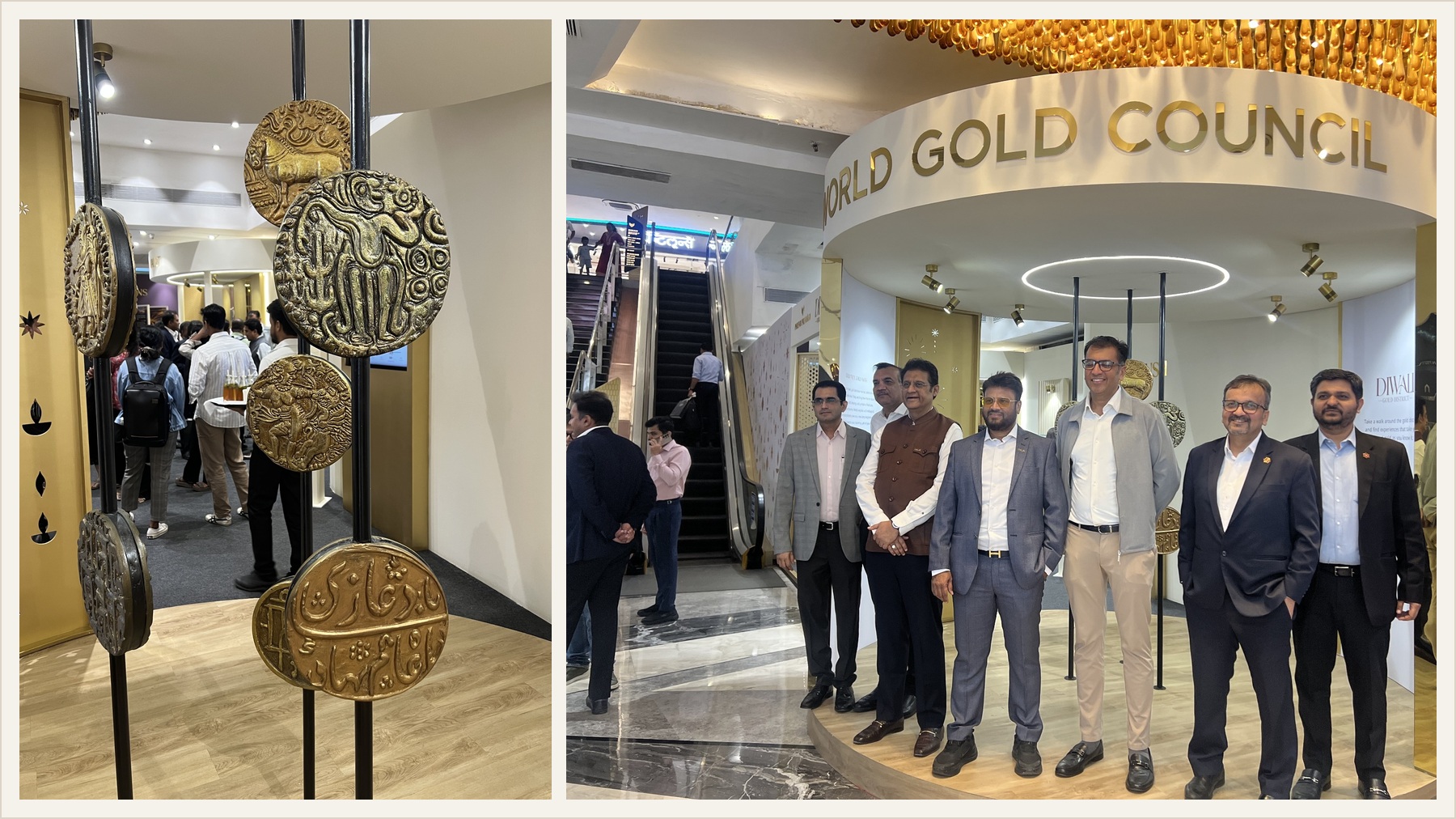
The World Gold Council is using technology and immersive experiences to change how younger consumers engage with gold, presenting the metal beyond its traditional associations with weddings and investment. The installation combines gold’s history, price performance and interactive features to encourage a new generation of consumers to explore gold jewellery as part of their lifestyle.
Sachin Jain, Regional CEO India, World Gold Council, said the initiative was designed to communicate gold’s story in a format that resonates with younger audiences. “The attempt of this installation is that this is just the first seed that we sow. And we hope that this translates into hundreds of such installations where young consumers can engage with gold as a category in the way they like gold,” Jain said.
He described the experience as a combination of history, technology and interactive engagement. “So it's a bit of history, it's a bit of nuances, it's a bit of mystique. It's fun, it's pictures, it's selfies, it's technology,” he said. Jain added, “I think the change is going to make gold less boring. Make gold not just sitting inside boring stores, but something fun, engaging, mystical, technology-driven, which is what I would like to do.”
Kaushlendra Sinha of the Indian Association for Gold Excellence and Standards (IAGES) said the installation could help bring younger consumers closer to gold by appealing to their curiosity and encouraging them to understand the metal’s significance.
“It's actually a brilliant idea. The idea is to engage young consumers and bring them to gold. And, you know, the way it has been put up, the way it has been designed, the innovation which has gone into it, the thought behind how do you engage the young consumer, engage them in their intellect, engage their curiosity. I think it's brilliant,” Sinha said.
He added, “It's going to bring the young consumer, Gen Z, closer to the gold as such. And they'll try and understand on their own how to support the economy, what gold does to them in their lives.”
Sinha said the industry was also working to make gold jewellery more accessible through product and pricing initiatives. “Of course, the idea is that the gold prices are being stabilised. Lower-currency gold is coming into the market. Lightweight jewellery is being made. So, the industry is making a lot of efforts from its side so that there are more consumers in gold,” he said.
He added that immersive experiences could complement these efforts by encouraging consumers to explore the category.
“And initiatives like this which present gold in a different light, you know, actually arouse curiosity. You want people to engage, understand what gold is, what's the history, where it has come from, how it has evolved over a period of time. So, all these things will bring in more consumers to the market, which will help go towards natural market expansion,” Sinha said.
Mansukh Kothari of Vasupati Jewellers said the initiative could help younger consumers understand gold’s history and long-term value while highlighting the possibilities offered by contemporary jewellery manufacturing. “I think the World Gold Council has taken a very good initiative. The young people, the children, they don't know the history of gold. They have made a very good interactive program,” Kothari said.
He referred to the installation’s presentation of gold prices over the years, explaining how the metal’s purchasing power had changed over time. He also highlighted the potential for parents and grandparents to use such experiences to explain gold’s value to younger family members.
“Today, this is the price. When you buy today, when your son and daughter get married, what will be the price of gold?” he said. Kothari maintained that gold’s investment value remained an important part of its appeal.
“The investment value is 100%. There is no doubt about it. It is the best of the best value,” he said. However, he also pointed to the role of design and manufacturing innovation in attracting younger consumers. According to Kothari, Indian manufacturers now have access to advanced technology, machinery and designs that enable them to cater to changing preferences.
“The best technology in the world is being used by Indian manufacturers,” he said. “The new designs and innovations will make the young people attracted to gold and make it a part of their personality,” Kothari added.
For retailers, the opportunity lies in making gold jewellery relevant across occasions and price points, rather than relying primarily on weddings and investment-led purchases.
Sinha said the installation could help position gold jewellery as part of younger consumers’ everyday lifestyles. “Absolutely. So, this entire thing is about making gold jewellery a lifestyle, part of the lifestyle actually. Because, you know, generally the new generation is looking at gold differently. Or they are not considering gold at this point in time,” he said.
He added, “So, exposure like this will make them think about gold, consider gold as part of their portfolio, part of their investment as well. And, you know, gold becomes the in thing, the help thing for the new generation.”
Rajesh Rokde, Chairman, All India Gem and Jewellery Domestic Council (GJC), said the experience could also help retailers build consumer confidence by making gold’s history and value more tangible.
“This is such a good initiative by the World Gold Council. After coming here, my attraction for gold has increased ten times. Because it is very important to know the history of anything. Because we live in the present, but if we get to know the history, then we get a different strength,” Rokde said.
He highlighted the potential for retailers to use similar installations to explain gold’s value directly to customers.
“I feel that this experience centre should be with every retailer. And when this experience centre comes to the retailer, then this confidence which is with the retailer today, will reach the customers,” he said.
Rokde also pointed to virtual jewellery trials as a way to help consumers visualise how different styles could suit them, including jewellery associated with different Indian cultures and occasions.
“So, different types of jewellery, customers buy different jewellery for different parties, different for festivals, different for weddings, different for Gen Z's. Gen Z's like different types of designs. You can see that here in the interaction,” he said. He added that the market could cater to different consumer segments through both lightweight and heavier jewellery.
“So, different types of jewellery, lightweight and heavyweight, both have different clientele,” Rokde said.
Alongside lifestyle-led engagement, the installation reinforces gold’s historical investment performance. Rokde said the experience had prompted him to reflect on gold’s returns over the long term and the confidence this could provide consumers.
He cited the installation’s comparison of investment returns over 26 years, saying gold had delivered a significantly higher return than fixed deposits in the example presented. “But in India, if you do the calculations of today's gold rate, then 3200%. 3000, 200. If someone can give this much return, then he can give gold,” Rokde said.
He added, “And I always say that gold has never disappointed anyone.” The investment comparison forms one part of the broader effort to communicate gold’s relevance to younger consumers. For the jewellery trade, the challenge is to combine its established association with long-term value with contemporary designs, accessible price points and experiences that encourage consumers to consider gold for more occasions.
The initiative’s longer-term impact will depend on whether such installations can be extended to retail outlets and translate consumer interest into purchases. As Jain indicated, the ambition is to move beyond a single installation and create more opportunities for younger consumers to engage with gold in ways that reflect their preferences.

Be the first to comment