


At IIJS Bharat Tritiya 2026, jewellers report steady raw material sourcing despite global volatility, with cautious sentiment prevailing; the industry, however, is closely monitoring geopolitical risks and pricing pressures, reports Khursheed Mistry.
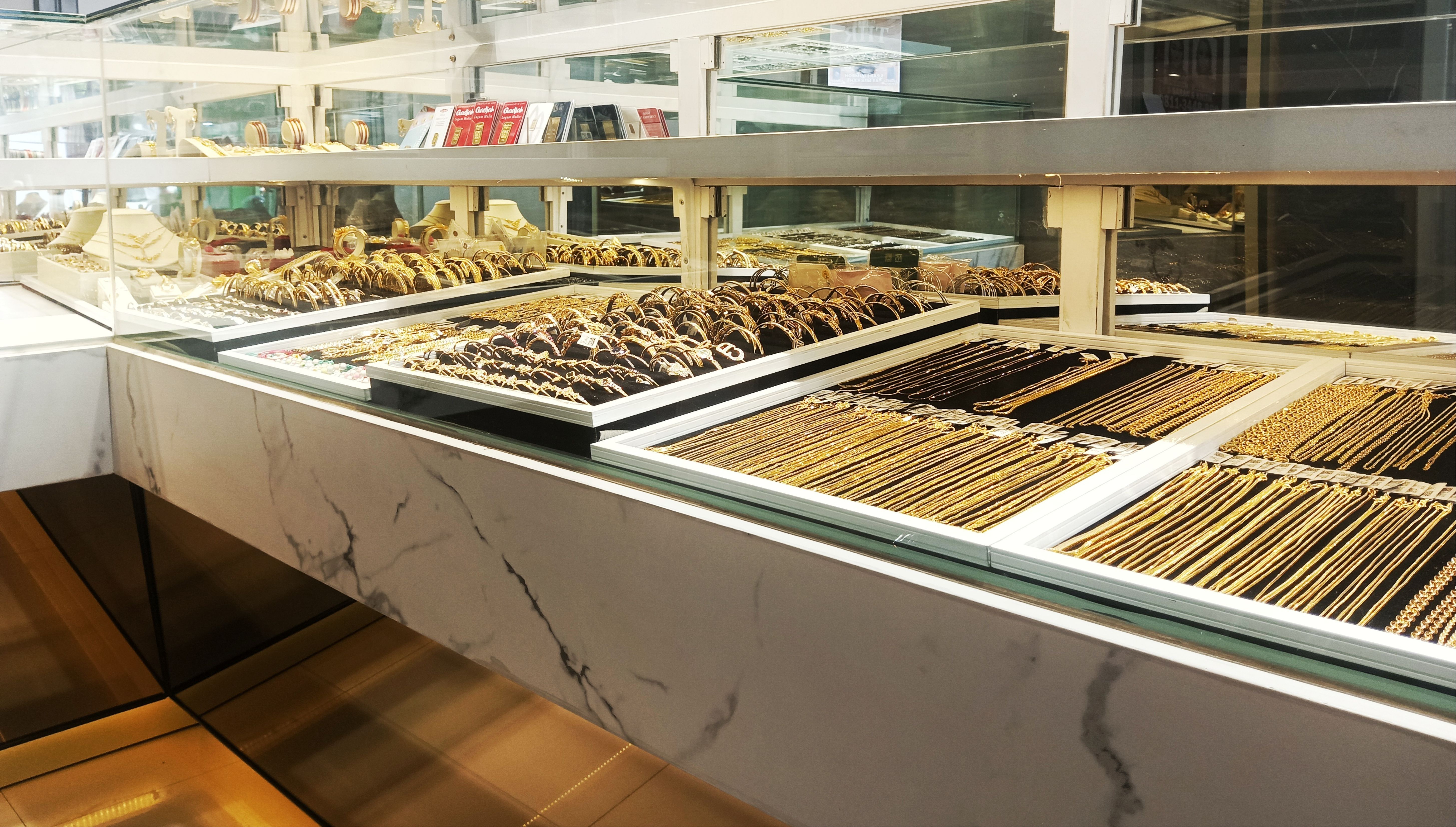
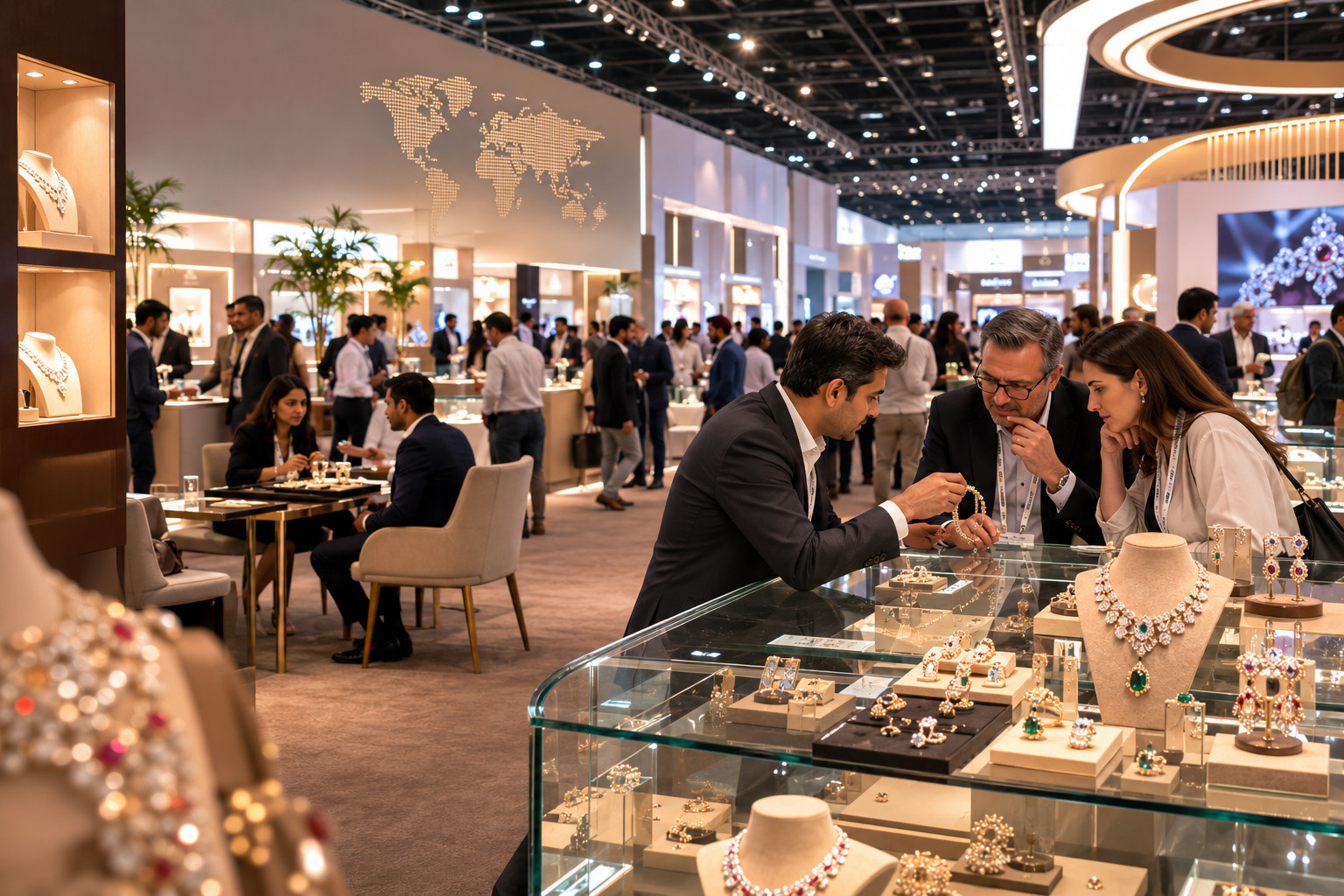
On Day Two of IIJS Tritiya 2026, conversations around sourcing were impossible to miss. Against a backdrop of geopolitical tensions, fluctuating commodity prices, and evolving trade routes, procurement has clearly become a point of global sensitivity. Yet, on the ground, the mood is far more composed than the headlines might suggest.
Across booths and meeting tables, manufacturers and retailers indicate that supply chains for gold, diamonds, and coloured gemstones remain largely stable. There is no visible disruption in sourcing, even as softer sales cast a shadow over overall sentiment.
“At present, there is no major issue in procuring raw materials. Supply is coming in as expected, and production is continuing smoothly,” says Alok Soni of Gomti Jewels.
This sense of continuity is echoed by Kishan Moradiya of HVK Jewels, who adds, “Right now, everything is normal. We are not facing delays or shortages that affect our operations immediately.”
However, beneath this operational continuity lies a layer of caution. Elevated gold prices and ongoing volatility are shaping a more watchful outlook. Diamonds and coloured gemstones — particularly those sourced from geopolitically sensitive regions — remain exposed to potential risks, should the situation escalate. The consensus across the show floor is clear: stability holds for now, but the road ahead is uncertain.
Walking through the exhibition halls, one theme consistently emerges — measured restraint. Despite global signals pointing towards the need for adaptive procurement strategies, most businesses have yet to make any structural shifts.
“We have not made any changes to our procurement strategy at this stage. There is no immediate need to react. We are watching how the situation develops,” says Khushboo Ranawat of Swarn Shilp Chains and Jewellers.
This sentiment is echoed by Soni, who emphasises a cautious approach: taking each day as it comes, rather than making premature decisions.
This on-ground reality reflects an industry that is alert, but not reactive. Conversations around diversifying suppliers, recalibrating inventory, and building flexibility into sourcing models are certainly gaining traction — but remain largely in the realm of discussion, rather than execution. For now, most players continue with existing procurement cycles and long-standing supplier relationships, while closely tracking global developments.
There is, however, a clear recognition that resilience may soon need to move from concept to practice. If geopolitical tensions persist or intensify, sourcing dynamics could shift rapidly, impacting both pricing and availability.
As Ratan Tanwar of House of Tanwar points out, “If the situation continues for a longer time, then the jewellery may start seeing an impact where gold, diamonds and gemstones are concerned, especially in pricing and availability. We deal in platinum jewellery, and currently there is absolutely no disruption where raw material is concerned.”
Back on the floor, exhibitors acknowledge that contingency thinking is underway, even if not yet formalized. “If the current situation escalates, then procurement will be affected, and we will have to rethink how we source,” Soni notes. At the same time, there is a strong undercurrent of confidence in the industry’s ability to adapt. As Ranawat puts it, the sector has navigated disruptions before, and will do so again, if required.
For now, IIJS Tritiya 2026 captures an industry in a holding pattern. Risks are well understood, global cues are being monitored closely, but decisive action is being deliberately deferred.
“Everything is normal for now — we are just observing how things unfold,” Soni sums up, a sentiment that resonates widely across the venue.
In essence, procurement in today’s jewellery landscape is becoming increasingly strategic in theory, even as it remains operationally unchanged in practice. The industry is not reacting just yet — but it is preparing. And if global conditions demand it, the shift from observation to action could be swift and decisive.






Be the first to comment